SJ Medical
Protective equipment is only trustworthy when its sterilization process is controlled, validated, and documented. A clean-looking respirator or gown may still carry invisible contamination. That detail matters.
So, what are the gold standards for ppe sterilization? The answer depends on the PPE material, intended use, and approved processing method. Reusable instruments may tolerate steam sterilization, while respirators, face shields, and polymer components can deform under high heat. Always follow the manufacturer’s instructions for use and local healthcare guidance. Guesswork has no place here.
This guide presents seven practical tips for achieving safer, more consistent sterilization outcomes. It covers thorough cleaning, correct packaging, validated cycle parameters, chemical and biological indicators, equipment maintenance, traceable records, and staff competency. Each step supports the next. A missed residue can block sterilant contact. A damaged package can compromise sterility after processing.
Reliable facilities use calibrated sterilizers, routine monitoring, and clear release criteria. They also investigate failed indicators instead of quietly repeating the cycle. That discipline reflects real experience, not just textbook theory. Still, no process is perfect. Materials age, staff can make mistakes, and emergency conditions may encourage shortcuts. These risks deserve honest review.
The goal is not merely sterile equipment. It is a repeatable system that protects workers, patients, and the environment. Careful judgment remains essential, especially when PPE has complex surfaces, filters, adhesives, or electronic parts. When uncertainty exists, consult qualified infection-control professionals and the manufacturer before processing the item.
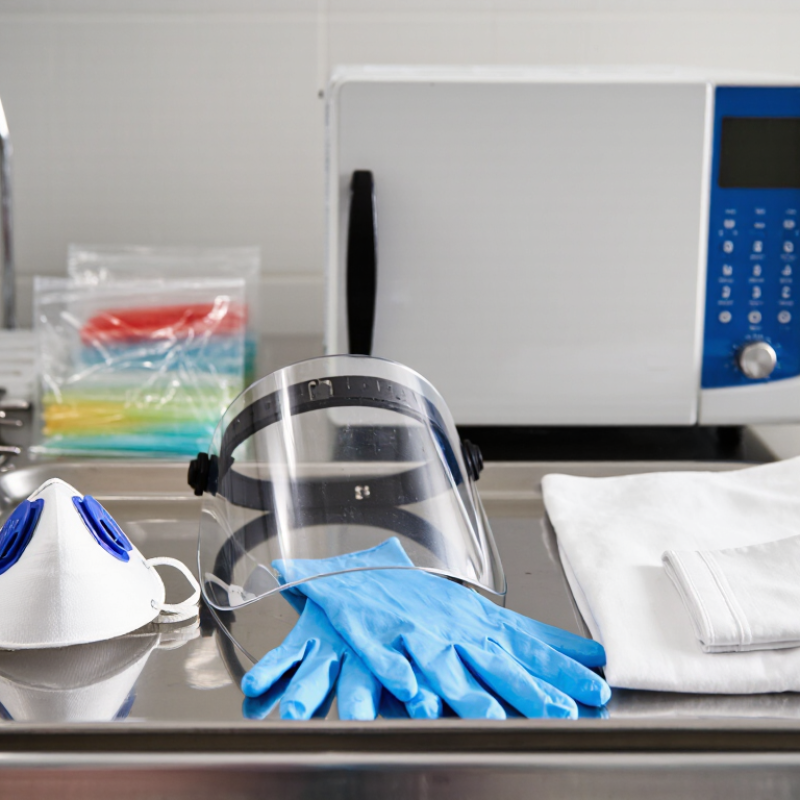
7 Tips for Gold Standard PPE Sterilization
Understanding PPE Sterilization Standards and Safety Goals
PPE sterilization begins with classification. Some gowns, respirators, and gloves are single-use products. They may lose filtration, elasticity, or barrier strength after processing. Check the product instructions and applicable regulatory requirements before choosing a cycle. Do not assume that heat, chemicals, or radiation are interchangeable.
Use a validated method for the material and risk level. Moist heat may suit compatible reusable items, while ethylene oxide or radiation may suit other designs. Standards such as ISO 17665, ISO 11135, and ISO 11137 guide process validation. They do not replace product-specific testing. Monitor time, temperature, pressure, concentration, and humidity. Biological and chemical indicators should support routine release decisions. Keep every load traceable.
Clean surfaces before sterilization. Soil can shield microorganisms. Package items to allow sterilant contact. Avoid overloading the chamber. Inspect seams, straps, valves, and fasteners after processing. Fit matters as much as sterility. A damaged respirator can create false confidence.
A perfect-looking cycle can still fail. That is the difficult lesson. Review failed indicators, wet packs, and unusual odors without shortcuts. Staff need documented training and clear quarantine rules. Independent audits can reveal habits internal checks miss. Safety goals remain practical: protect the wearer, preserve PPE performance, prevent cross-contamination, and provide evidence that each released load met its defined requirements.
7 Tips for Gold Standard PPE Sterilization
Selecting a sterilization method begins with the PPE material, not the equipment. Polypropylene gowns and masks may tolerate limited moist heat, but repeated exposure can weaken fibers and elastic straps. Elastomeric respirators require separate testing because heat, humidity, and chemicals can damage seals. Nitrile gloves may lose strength after aggressive cycles. Small changes matter.
Vaporized hydrogen peroxide can suit some respirators and heat-sensitive components, but compatibility must be verified through cycle testing. Ethylene oxide may penetrate complex designs, yet residues and aeration requirements demand strict professional control. Ultraviolet light is useful for surface treatment, but shadows and folded areas can remain untreated. It should not be treated as a complete solution without evidence.
Clear face shields often need careful temperature control because polycarbonate can warp or become cloudy. Always inspect seams, filters, straps, transparency, and fit after processing. Use validated indicators and documented load conditions, then confirm performance through recognized quality procedures. A successful cycle on one PPE model proves little about another. In practice, teams sometimes overtrust a familiar method. That is a mistake worth revisiting. When material data is incomplete, conservative testing and limited reuse are safer than assumptions.
| PPE Material or Component | Typical PPE Examples | Moist Heat / Steam | Vaporized Hydrogen Peroxide | Ethylene Oxide | UV-C / UVGI | Key Compatibility Risks | Required Validation Checks |
|---|---|---|---|---|---|---|---|
| Spunbond/meltblown polypropylene | Disposable surgical masks, respirator filter layers, isolation-gown fabric | Conditional May deform or lose filtration performance if temperature, humidity, or cycle exposure is excessive. |
Conditional Can be compatible with validated cycles, but repeated exposure may affect fit, straps, or filtration. |
Conditional Possible for selected products; aeration and residual-gas controls are essential. |
Conditional Surface decontamination only; shadowed areas and dose uniformity are major limitations. |
Loss of electrostatic filtration charge, material embrittlement, shrinkage, strap failure, and incomplete treatment inside layered structures. | Measure filtration efficiency, airflow resistance, fit, visual condition, strap strength, and the number of permitted cycles. |
| Polyester and polyester blends | Reusable gowns, face coverings, protective clothing | Generally compatible Heat tolerance is usually better than that of filter media, subject to the garment’s care instructions. |
Conditional Confirm that dyes, coatings, elastic, and seams tolerate the process. |
Conditional Requires validated aeration and assessment of residuals in multilayer garments. |
Conditional Useful only when all surfaces receive the required dose. |
Color fading, coating damage, seam degradation, shrinkage, and reduced liquid-barrier performance. | Check fabric strength, dimensional stability, liquid penetration, seam integrity, and microbial reduction on representative loads. |
| Cellulose, paper, and cellulose-containing laminates | Paper-based packaging, some mask components, absorbent inserts | Usually unsuitable Moisture can weaken, distort, or delaminate the material. |
Conditional Porosity may help penetration, but moisture content and packaging configuration must be controlled. |
Conditional Often processable when aeration and residual controls are established. |
Conditional Penetration through folds, layers, and packaging is unreliable. |
Tearing, loss of tensile strength, delamination, retained chemical residues, and shielding of microorganisms. | Evaluate package integrity, material strength, residual chemicals, dose distribution, and sterility assurance for the complete configuration. |
| Natural rubber latex | Reusable examination gloves, elastic components, some respirator seals | Conditional Validated low-temperature or controlled cycles may be suitable; excessive heat accelerates aging. |
Conditional Compatibility depends on formulation, thickness, and cycle parameters. |
Conditional May be suitable after validated aeration, but residuals and changes in elasticity must be assessed. |
Not a sole method UV exposure can age rubber and may not treat shaded surfaces. |
Loss of elasticity, cracking, tackiness, oxidation, and reduced barrier protection. | Perform leak, elongation, tensile-strength, visual, and barrier-integrity testing before and after processing. |
| Nitrile rubber | Disposable examination gloves, glove cuffs, elastomeric seals | Conditional Heat and moisture may be tolerated for selected products, but disposable gloves are not automatically reusable. |
Conditional Requires product-specific evidence for chemical and mechanical compatibility. |
Conditional Possible for selected systems with validated aeration and residual limits. |
Not a sole method Uneven exposure and material aging limit reliability. |
Punctures, loss of elasticity, swelling, cracking, and chemical residue retention. | Use leak testing, tensile testing, visual inspection, and residual analysis where applicable; define a maximum reuse count. |
| Silicone elastomer | Reusable respirator face seals, valves, and flexible components | Generally compatible Commonly tolerates controlled heat, although attached components may be less tolerant. |
Often compatible Confirm that the complete assembled device, not only the silicone, has been evaluated. |
Conditional Requires validated aeration and assessment of adsorbed residues. |
Conditional Surface treatment is limited by shadows, crevices, and assembly geometry. |
Seal deformation, valve malfunction, residue retention, and degradation of bonded or attached parts. | Conduct fit or seal testing, valve-function testing, visual inspection, and cleaning verification after every cycle. |
| Polycarbonate and other clear rigid plastics | Face shields, protective eyewear lenses, goggle frames | Conditional High heat may warp the component or damage anti-fog and anti-scratch coatings. |
Often compatible Verify resistance of coatings, adhesives, and hinges. |
Conditional Confirm that residues do not remain on optical surfaces or in enclosed parts. |
Conditional Requires dose mapping and complete exposure of all relevant surfaces. |
Clouding, crazing, yellowing, coating loss, hinge damage, and reduced optical clarity. | Inspect optical clarity, coating condition, mechanical integrity, visibility, and fit; verify the required UV dose where UVGI is used. |
| Polyurethane foam and adhesive assemblies | Comfort pads, nose cushions, gaskets, bonded straps | Often unsuitable Heat and moisture can cause shrinkage, compression-set changes, or adhesive failure. |
Conditional Assess off-gassing, swelling, and bond strength. |
Conditional Porous foam may retain gas and requires extended, validated aeration. |
Not a sole method Shadows and porous structure can prevent reliable treatment. |
Loss of cushioning, adhesive delamination, retained residues, odor, and altered fit. | Check bond strength, compression recovery, odor or residue, fit, and microbial reduction throughout the assembled product. |
Important: Compatibility does not establish sterilization. Every PPE product and reprocessing cycle requires documented validation, including microbial inactivation, material performance, fit, barrier function, residue control, packaging, and maximum reuse limits. Follow the product manufacturer’s validated instructions and applicable regulatory requirements.
Tip 1: Confirm the PPE is reusable before processing it. Many gowns, respirators, and face shields are designed for one use only. Follow the manufacturer’s instructions for use, not memory or habit. The CDC reports that about one in 31 U.S. hospital patients has a healthcare-associated infection on any given day. That figure makes preparation more than a paperwork task.
Tip 2: Separate, open, and inspect each item before cleaning. Remove visible soil with a method approved for the material. Check seams, elastic, fasteners, lenses, and breathing valves. Blood, tape residue, or dried disinfectant can hide damage. AAMI ST79 stresses controlled cleaning, inspection, packaging, and sterilization as connected steps. Skipping one weakens the entire process. It is easy to rush here.
Tip 3: Use clean water, correct detergent concentration, and validated equipment settings. Overloading a washer or sterilizer can block contact with cleaning agents or steam. Place items so hinges and folded surfaces remain accessible. The CDC’s disinfection and sterilization guidance requires monitoring physical, chemical, and biological indicators for sterilization processes. Record results before releasing PPE for use. Do not rely on a cycle display alone.
A final inspection should find cracks, stiffness, discoloration, missing parts, or trapped moisture. Remove questionable PPE from service. Perfect consistency is difficult. That is why checklists, staff training, and periodic audits matter.
Validated sterilization cycles begin with the PPE material, not the machine. Heat, moisture, pressure, and chemical exposure can weaken seams or filtration layers. ISO 17665 requires documented process development, qualification, and routine monitoring for moist-heat sterilization. A cycle is not validated simply because the display shows the correct temperature.
Tip 1: Define the load precisely. Record material type, packaging, quantity, arrangement, and maximum weight. Place chemical indicators inside representative packs. The CDC recommends mechanical and chemical monitoring for every sterilization load, plus biological indicators at least weekly. For implant loads, biological monitoring is recommended for every load (CDC Guideline for Disinfection and Sterilization, updated 2019). Small details matter.
Tip 2: Treat failed results as process evidence, not paperwork. Review exposure time, sensor calibration, air removal, drying, and operator actions before releasing PPE.
Tip 3: Use a biological indicator challenge that matches the validated cycle. The FDA states that reprocessing claims require evidence demonstrating safety and effectiveness for the specific device and process. PPE is often disposable, and repeated sterilization may reduce protection. Our assumptions can be wrong. Keep failed loads quarantined, investigate root causes, and trend chemical, biological, and mechanical results across time. One clean report does not prove consistent performance.
Safe PPE sterilization continues after the cycle ends. The WHO’s 2022 Global Report on Infection Prevention and Control found that about 7 in 100 acute-care patients in high-income countries acquire at least one healthcare-associated infection. Storage discipline matters.
Keep released PPE in a clean, dry, controlled area. Place packages on covered shelving, never directly on the floor. AAMI ST79 guidance supports protecting sterile supplies from dust, moisture, traffic, and damage. Leave space from walls and ceilings.
Use first-expire, first-out rotation, even when sterility is event-related. A torn pouch is not “probably fine.” Remove it.
Handling needs calm hands and clear records. Check the chemical indicators, cycle printout, biological-monitor results, and package integrity before release. CDC guidance identifies wetness, punctures, tears, and failed seals as reasons to question sterility.
Do not release a questionable load. Quarantine it, investigate the cause, and document the decision. Staff should move PPE with clean hands and avoid crushing cartons during transport.
One overlooked detail remains common: a dry outer box can hide a damp inner package. Our process should catch that, but it may not. Regular audits, staff competency checks, and honest incident reviews keep convenience from replacing evidence.
Check the item’s instructions before processing it. Many gowns, respirators, and face shields are single-use. Do not rely on memory or habit. When uncertain, remove the item from reuse decisions.
Separate and open each item. Look for blood, tape residue, and dried disinfectant. Inspect seams, elastic, fasteners, lenses, and breathing valves. Small damage can hide beneath folded surfaces.
Use clean water and the correct detergent concentration. Follow validated equipment settings. Avoid overloading washers. Hinges and folded areas need direct cleaning access.
Define the load by material, packaging, quantity, arrangement, and weight. Place indicators inside representative packages. Review physical, chemical, and biological monitoring results. A cycle display alone is not enough.
Keep the load quarantined. Review exposure time, calibration, air removal, drying, and operator actions. Investigate the likely cause before release. One successful report proves very little.
No. Heat, moisture, pressure, and chemicals may weaken seams or filtration layers. Repeated processing can reduce protection. Our assumptions may be wrong, so inspect performance evidence carefully.
Use a clean, dry, controlled storage area. Keep packages on covered shelves, away from floors, walls, and ceilings. Protect them from dust, moisture, traffic, and crushing. Dampness is easy to miss.
Reject packages with tears, punctures, wetness, damaged seals, or missing parts. Check indicators, records, and package integrity before release. Quarantine questionable items. A dry outer carton may hide a damp inner package.
This guide explains what are the gold standards for ppe sterilization and how to build a safe, repeatable process from start to finish. It begins by clarifying sterilization standards, safety objectives, and the importance of reducing contamination risks while preserving the protective function of personal protective equipment. Because PPE can be made from different materials, the guide also emphasizes selecting a compatible sterilization method that will not cause damage, deformation, or loss of performance.
Before sterilization, PPE should be properly prepared, cleaned, dried, and carefully inspected for visible damage or wear. Validated sterilization cycles must then be applied according to established procedures, with appropriate indicators and monitoring records used to confirm results. Finally, sterilized PPE should be stored in clean, controlled conditions, handled carefully, and released only after inspection and documentation confirm that it is safe and suitable for use.
