SJ Medical
Accurate rapid COVID-19 antigen testing depends on more than opening a test kit and reading its window. It requires correct timing, careful collection, proper storage, and disciplined interpretation. A swab that barely reaches the recommended area may collect too little material. A test stored in a hot car may also produce unreliable results.
Dr. Michael Mina, a physician and epidemiologist, has described rapid testing as “a snapshot in time.” That phrase matters. A negative result reflects the sample collected at that moment, not permanent proof that infection is absent. Anyone researching how to ensure accuracy in rapid covid-19 antigen testing should consider repeat testing, especially after recent exposure or when symptoms continue. Follow the product instructions exactly. Check the expiration date. Let the kit reach the stated room temperature. Do not substitute collection tools or testing liquids.
Timing remains complicated. Testing too early can miss a developing infection, while testing after symptoms improve may answer a different question. Public health guidance can also change as evidence develops. That is easy to overlook. Users should confirm current recommendations from trusted health agencies, such as the FDA or CDC, and consult a healthcare professional when symptoms are severe, persistent, or confusing.
No home test is flawless. Human error happens. A careful process still reduces avoidable mistakes, improves confidence, and supports more responsible health decisions.
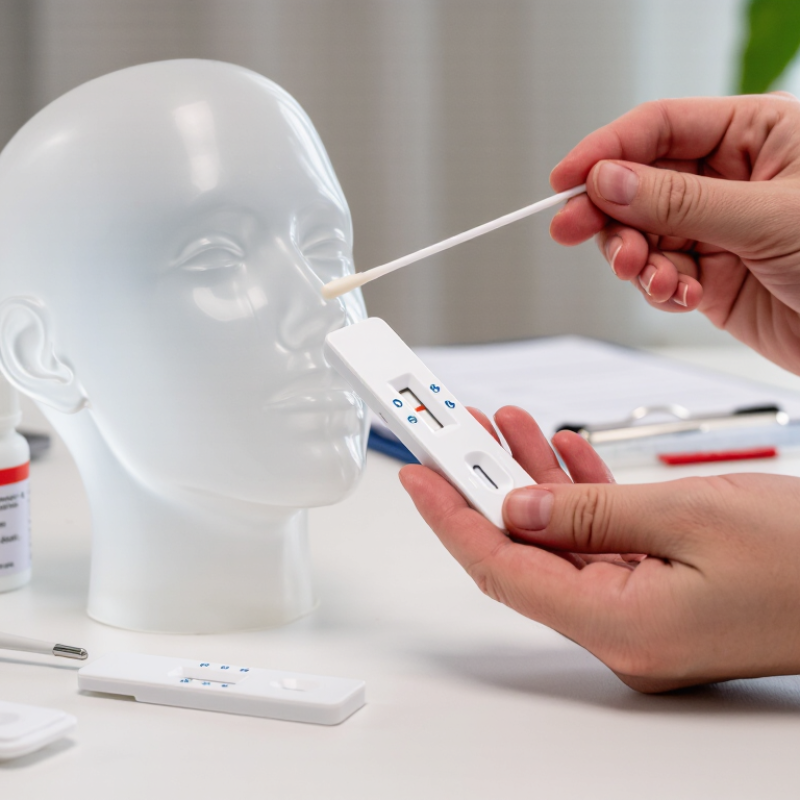
Choosing the appropriate rapid COVID-19 test starts with the testing purpose. A symptomatic person should select an authorized antigen test designed for nasal samples and follow its exact instructions. Timing matters. Testing during the first days of symptoms can improve detection, while testing too early may miss a developing infection. The U.S. Food and Drug Administration advises repeating a negative antigen result after 48 hours, according to the product’s approved instructions. A single negative result should not overrule symptoms or a known exposure.
Performance data also deserves careful attention. A 2022 Cochrane review found that rapid antigen tests had about 69.3% sensitivity and 99.3% specificity overall. Among people without symptoms, sensitivity fell to roughly 55.5%. Specificity was high. False negatives remain the practical weakness.
Choose tests with clear regulatory authorization, transparent performance data, suitable storage requirements, and a sample type you can collect correctly. Check the expiration date, let the kit reach room temperature, and use a timer. Small handling errors matter. If symptoms persist, exposure risk is high, or the result conflicts with clinical signs, consider a laboratory molecular test or professional medical advice. I would not treat rapid testing as a perfect yes-or-no answer; real-world accuracy depends on timing, technique, viral level, and whether the test matches the situation.
What Is the Best Way to Ensure Rapid COVID-19 Test Accuracy?
Reliable results begin with a careful quality check. Inspect the package for tears, moisture, or unclear printing. Do not use a test with missing components. Check that the control line appears correctly after testing. If it does not, the result is invalid. Follow the instructions exactly, especially the sample collection steps and reading time. A rushed swab can reduce the amount of material collected. Small details matter.
Expiration dates deserve equal attention. Find the date on the outer package, not only on the test device. Some authorities may update expiration information, so check current official guidance when available. Never guess when a date is unreadable. An expired test may still look normal, which makes this step easy to overlook. I once considered this check routine, but routine checks are often the ones people skip.
Storage conditions can quietly affect performance. Keep the kit within the temperature range listed in its instructions. Avoid direct sunlight, damp bathrooms, hot cars, and freezing temperatures unless specifically permitted. Let a cold or overheated kit return to the recommended temperature before use. Store unused materials in their original packaging. If symptoms continue after a negative result, repeat testing as directed or contact a qualified healthcare professional. A negative test is not a guarantee.
What Is the Best Way to Ensure Rapid COVID-19 Test Accuracy?
Following sample collection and testing instructions precisely is essential for a reliable rapid COVID-19 result. Read the complete instructions before opening the test. Different tests may require different swabbing depths, sample volumes, and waiting times. Check the expiration date and allow the kit to reach the stated room temperature. Wash and dry your hands. Keep the test surface clean and flat.
Tips: Use the included swab only. Do not touch its tip. Follow the exact number of rotations and collection sites. Insert the sample into the buffer as directed. Add the correct number of drops. Use a timer, not guesswork. Reading the result too early or too late can produce confusion. Write down the test time if necessary.
A common mistake is rushing because the process looks simple. It is not always simple. Nasal mucus, poor swabbing, or an opened package can affect performance. If the control line does not appear, the test is invalid and should not guide decisions. A negative result may not exclude infection, especially soon after exposure or when symptoms continue. Follow local health guidance and contact a qualified healthcare professional when symptoms are serious or results conflict. Even careful users can make errors, so reviewing the instructions again is worthwhile.
| Accuracy Factor | Recommended Practice | Why It Matters | Practical Checkpoint | Priority |
|---|---|---|---|---|
| Test selection | Confirm that the test is authorized for the intended sample type, such as nasal or oral fluid, and check its expiration date before use. | Using an unsuitable sample type or an expired test can make the result unreliable. | Read the package instructions and verify the expiration date before opening the kit. | High |
| Storage conditions | Store the unopened test according to the temperature and humidity limits stated in the instructions. Avoid leaving it in excessive heat, freezing conditions, or direct sunlight. | Improper storage can damage test components and affect the chemical reaction used to detect viral proteins. | Do not use a kit that was visibly damaged, wet, or stored outside the specified conditions. | High |
| Hand hygiene | Wash or sanitize hands before collecting the sample and place all components on a clean, dry surface. | Clean handling reduces contamination and helps prevent errors during sample preparation. | Allow sanitized hands and the work surface to dry before handling the swab or test device. | High |
| Pre-test preparation | Follow the kit-specific preparation requirements. If the instructions require avoiding food, drink, smoking, or oral products before testing, observe the stated interval. | Residue or excess moisture can interfere with some oral or saliva-based sampling methods. | Do not apply general preparation rules to every test; use the instructions supplied with that specific kit. | Medium |
| Nasal sample collection | Insert the swab only as far and for as long as directed. Rotate or rub the swab against the specified areas of both nostrils when required. | Insufficient contact with the collection area may produce too little material for detection. | Use the exact depth, number of rotations, and collection time stated in the instructions. | High |
| Saliva or oral sample collection | Collect the sample exactly as directed, without touching the swab or collection container to unrelated surfaces. | Incorrect volume, dilution, or contamination can reduce the validity of the test. | Make sure the sample reaches the required level or is applied to the test device as specified. | High |
| Extraction procedure | Place the swab in the extraction solution for the specified time and mix it using the required number of rotations or squeezes. | The extraction step releases viral proteins into the solution for detection. | Do not shorten the mixing time or reuse extraction liquid from another kit. | High |
| Correct sample volume | Add the exact number of drops or the exact quantity of sample to the test device. | Too little or too much liquid can interfere with the flow of the sample and produce an invalid result. | Hold the dropper vertically if instructed and count each drop carefully. | High |
| Timing the result | Start a timer immediately after applying the sample and read the result only within the stated time window. | Reading too early may miss a developing line, while reading too late can lead to misleading changes caused by drying. | Many rapid antigen tests use a reading window of approximately 15–30 minutes, but the kit instructions always take priority. | High |
| Control line or control signal | Check that the control line or control indicator appears as described. | The control confirms that the sample flowed correctly and that the test procedure functioned properly. | If the control indicator is missing, report the result as invalid and repeat with a new test. | High |
| Interpreting a positive result | Treat a visible positive test line as positive, even if the line is faint, provided the control is valid and the result is read within the permitted window. | A positive rapid antigen result is generally reliable, particularly when symptoms or recent exposure are present. | Follow current public-health guidance and seek medical advice when treatment decisions or high-risk contacts are involved. | High |
| Interpreting a negative result | Do not assume that one negative rapid antigen result completely rules out infection, especially during early infection or when symptoms are present. | Rapid antigen tests are generally less sensitive than laboratory molecular tests and may miss low viral levels. | Consider repeat testing after 48 hours according to current health guidance and the test instructions. | High |
| Repeat testing | For symptomatic people with an initial negative antigen test, repeat testing 48 hours later is commonly recommended. People without symptoms may need a series of tests 48 hours apart. | Serial testing increases the chance of detecting infection as the amount of virus changes over time. | Use a new, unexpired test for each repeat test and record the date and result. | Medium |
| Result documentation | Record the test date, time, sample type, result, and whether the control indicator was valid. | Accurate records help healthcare professionals interpret changing results and support workplace, school, or travel requirements. | Take a clear photograph only if permitted, without relying on a photo taken outside the official reading window. | Standard |
| When confirmation is important | Seek professional advice about a laboratory molecular test when symptoms are concerning, exposure risk is high, results conflict, or a definitive result is required. | Laboratory testing can provide greater sensitivity in situations where a rapid test result is uncertain. | Urgently seek medical care for severe symptoms such as trouble breathing, chest pain, confusion, or difficulty staying awake. | High |
What Is the Best Way to Ensure Rapid COVID-19 Test Accuracy?
Confirming Unexpected Results with a Molecular Test
A rapid COVID-19 test is useful, but its result depends on timing, sampling, and viral levels. A faint line should not be dismissed. Neither should an unexpected negative result. In a 2022 Cochrane Diagnostic Test Accuracy Review, rapid antigen tests detected about 73% of infections in symptomatic people and 55% in people without symptoms. Specificity was approximately 99%, so false positives were less common than false negatives.
A negative result can feel reassuring. That feeling can mislead. If symptoms appear after exposure, repeat the antigen test after 48 hours, following current public-health guidance. When the result conflicts with symptoms, exposure history, or a previous test, confirm it with a molecular test. Molecular testing, including nucleic acid amplification testing, can detect smaller amounts of viral genetic material. It is usually more sensitive, especially early in infection or when viral levels are low.
Collection technique matters. Wash and dry your hands, check the expiry date, and follow the swabbing time exactly. Do not improvise the procedure. A rushed swab may produce a poor sample. The U.S. Food and Drug Administration advises additional testing after an initial negative antigen result, particularly when symptoms are present. This approach is not perfect, because no test is. Still, a molecular confirmation can prevent a misleading rapid result from shaping medical decisions or close-contact choices.
Confirming unexpected antigen-test results with a molecular test
A negative rapid antigen result may not rule out infection, particularly early in illness. Current public-health guidance recommends repeating an antigen test 48 hours later when symptoms are present, and repeating it twice at 48-hour intervals when symptoms are absent. If a result is unexpected or does not match symptoms or exposure history, a molecular test can provide additional confirmation.
Data basis: U.S. public-health guidance on repeat antigen testing; molecular confirmation should follow local clinical and public-health recommendations.
Timing matters. A rapid antigen test detects viral proteins, so testing too soon may miss an infection. The Cochrane Diagnostic Test Accuracy Review reported about 73% sensitivity during the first week of symptoms, compared with roughly 55% later. Specificity remained near 99%, meaning positive results were usually reliable.
Symptoms matter. If fever, sore throat, cough, or unusual fatigue appears, test immediately. A negative result should not end the investigation. Current U.S. Food and Drug Administration guidance recommends repeating a negative test 48 hours later, with additional testing for people without symptoms. The weak point is timing.
After a known exposure, the U.S. Centers for Disease Control and Prevention advises testing at least five full days afterward. If the result is negative, repeat it 48 hours later, then again 48 hours after that when appropriate.
Three negative rapid tests provide more confidence than one, but they do not guarantee safety. A molecular test may be more useful when symptoms are strong, exposure risk is high, or someone vulnerable lives nearby.
The Infectious Diseases Society of America also recognizes molecular testing as generally more sensitive than antigen testing.
Read the instructions exactly. Check the expiration date and collect the sample carefully. I would not ignore worsening symptoms because of one negative strip.
No home strategy is flawless. When results and symptoms disagree, contacting a qualified healthcare professional is the safer interpretation.
Inspect the package for tears, moisture, or unclear printing. Do not use missing parts. Check the expiration date on the outer package.
Keep it within the temperature range listed in the instructions. Avoid sunlight, damp bathrooms, hot cars, and freezing conditions. Keep unused materials sealed.
The test is invalid if the control line does not appear. Repeat with a new kit and follow the instructions carefully. Do not interpret it as negative.
Yes, an expired test may appear unchanged. Never guess an unreadable date. Check current official guidance when expiration information has changed.
If symptoms continue, repeat testing as directed. A negative result is not a guarantee. Timing and sample quality can affect accuracy.
If symptoms or exposure are present, repeat the antigen test 48 hours later. After exposure, testing is commonly advised at least five full days afterward. One test may miss infection.
Consider molecular confirmation when symptoms, exposure history, and the rapid result disagree. It can detect smaller amounts of viral material and is usually more sensitive.
Fever, sore throat, cough, and unusual fatigue increase concern. A negative result should not end the investigation. The timing may be wrong.
Wash and dry your hands, then follow the exact swabbing time. A rushed swab may collect too little material. I sometimes underestimate this small step.
Do not dismiss a faint line. Read it within the stated time and follow the instructions. When uncertain, seek professional advice or confirm the result.
Ensuring accurate rapid COVID-19 antigen testing begins with selecting an appropriate test for your age, symptoms, and testing purpose. Before use, check that the package is sealed, the test is within its expiration date, and all components have been stored under the recommended conditions. To understand how to ensure accuracy in rapid covid-19 antigen testing, carefully follow every instruction, especially those involving sample collection, swab handling, timing, and result interpretation. Improper sampling or reading the test too early or too late may affect reliability.
Results should also be considered alongside the timing of exposure, current symptoms, and the likelihood of infection. A negative result taken very soon after exposure may not rule out infection, so repeat testing may be appropriate when advised by health professionals. Unexpected, unclear, or conflicting results should be confirmed with a molecular test, particularly when symptoms or exposure risk are significant. Following these steps helps reduce avoidable errors and supports more informed health decisions.
