SJ Medical
Radial access has moved from a specialist technique to a practical standard in modern coronary intervention. Why is radial access becoming the standard for coronary intervention? The answer begins with safety, recovery, and consistent procedural performance.
Through the wrist, clinicians can often reduce major bleeding and vascular complications compared with femoral access. Patients may sit up sooner after the procedure. Many can walk within hours, with less pressure applied to the access site. That difference matters in busy Chinese hospitals, where efficient patient turnover and dependable recovery are increasingly important.
Dr. Sunil V. Rao, a leading interventional cardiologist and radial-access researcher, has stated, “Radial access should be the default strategy for coronary intervention when clinically appropriate.” The final words matter. “When clinically appropriate.”
Radial access is not automatically superior in every case. Small arteries, severe spasm, anatomical variation, emergency conditions, or complex support requirements can change the decision. Operator experience also affects outcomes. A device may appear excellent on paper yet feel difficult during a long, technically demanding procedure.
This is why China’s top radial access devices deserve careful comparison. Their value depends on more than packaging or market visibility. Sheath flexibility, hydrophilic coating, puncture control, hemostasis accuracy, and patient comfort all shape real-world performance. A compression device that leaves a clean, dry wrist after two hours tells a stronger story than a brochure.
This introduction examines ten leading device categories and the clinical reasons behind their growing adoption. The evidence is persuasive, but not perfect. Standardization should support judgment, not replace it.
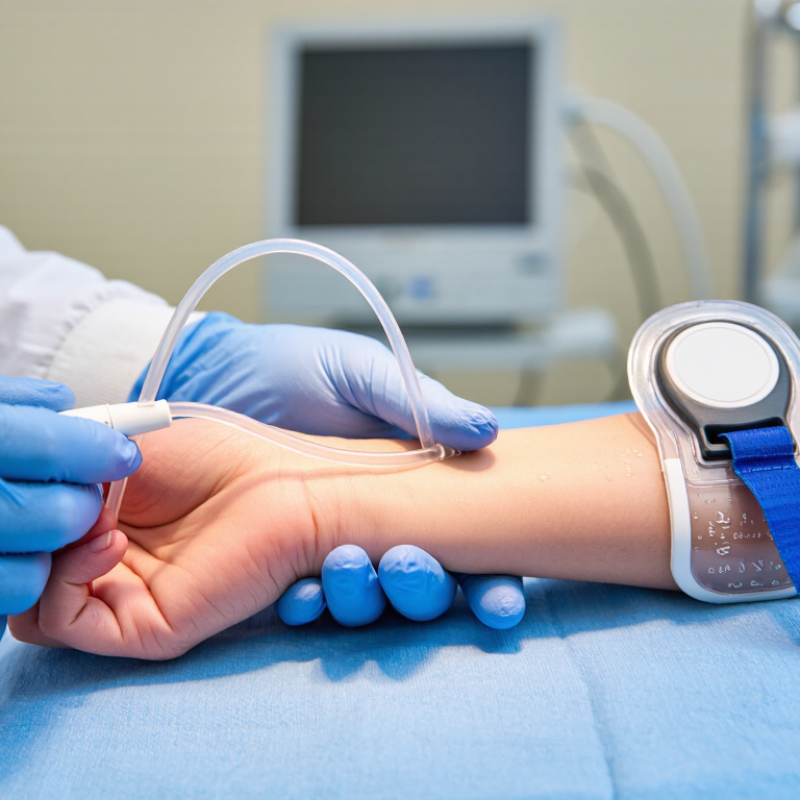
A radial access device is a sterile tool set used to enter the radial artery near the wrist. It supports catheter placement during diagnostic or interventional procedures. The set commonly includes a needle, guidewire, introducer sheath, and dilator. Some systems also include a compression device for bleeding control after removal. The sheath creates a stable pathway while protecting the artery from repeated instrument movement.
Its main purpose is controlled vascular access. Clinicians can guide a catheter through the artery toward the heart or other target vessels. The wrist location often allows earlier patient movement than femoral access. It may also reduce access-site bleeding in suitable patients. In practice, correct positioning matters as much as device design. A shallow puncture, poor wrist support, or excessive force can cause pain, spasm, or vessel injury.
Radial access became widely accepted because it combines practical handling with a favorable safety profile. Yet calling it universally standard is too simple. Not every wrist is suitable. Small arteries, weak pulses, previous procedures, or unusual anatomy can change the plan. Ultrasound may improve vessel assessment, although it is not used in every setting. Experienced teams check circulation, choose an appropriate sheath size, and monitor the hand afterward. That detail matters. Device performance still depends on training, patient assessment, and careful technique.
China Top 10 Radial Access Devices: Why Are They Standard?
Radial artery procedures depend on controlled entry through a small, mobile vessel. Access devices therefore need an atraumatic tip, smooth transition, and predictable insertion force. A tapered dilator can reduce resistance at the skin and vessel wall. A soft, rounded tip may also limit irritation during advancement. Small details matter.
Many contemporary devices use hydrophilic coatings to reduce friction after contact with blood or saline. Their sheaths should resist kinking while remaining flexible around the wrist. Clear depth markings help clinicians estimate position without repeated imaging. A secure hub supports guidewire movement and reduces accidental disconnection during catheter exchange.
Hemostasis is another central design concern. Adjustable compression features can support bleeding control while preserving distal hand circulation, when used according to clinical protocols. Device sizing must match vessel diameter, patient anatomy, and procedural goals. One size does not suit every wrist. That point is easy to overlook.
In practice, clinicians also assess packaging integrity, visible labeling, and consistent manufacturing quality. These factors support traceability and safer preparation. However, design alone cannot replace ultrasound assessment, sterile technique, or operator training. No access system is perfect. Some features improve handling but may increase stiffness or cost. That trade-off deserves honest review before routine adoption.
China’s radial access devices became standard through repeated clinical use, not a single policy decision. In catheterization laboratories, clinicians found that wrist access often reduced bleeding risks and supported earlier patient movement. These benefits mattered in busy hospitals where beds, nursing time, and recovery space were limited.
The device set usually includes a radial sheath, guidewire, diagnostic catheter, compression band, and related accessories. Each part must work smoothly through a small artery. Experienced teams examine sheath flexibility, coating quality, puncture control, and hemostasis performance. Published evidence, local training programs, and hospital protocols helped turn these details into routine practice. Procurement teams also value stable supply and consistent sizing.
It was not instant.
Some patients have small vessels, arterial spasm, or difficult anatomy. New operators may need more time and supervision. A device that performs well in one hospital may feel less suitable in another because techniques, patient profiles, and workflow differ. This is where the “top ten” idea becomes limited; popularity does not always equal clinical fitness. Reliable selection still depends on operator experience, patient assessment, sterile handling, and post-procedure monitoring. Chinese hospitals continue refining these standards through audits, simulation training, and feedback from daily cases.
Radial access became widely adopted because clinical evidence shows a lower rate of major vascular complications than femoral access. In the randomized RIVAL trial, major vascular complications occurred in 1.4% of patients treated through radial access compared with 3.7% through femoral access. This evidence supports the preference for radial access devices in modern interventional procedures, including China.
Source: Jolly SS et al., RIVAL Trial, The Lancet, 2011, DOI: 10.1016/S0140-6736(11)60404-2. The chart presents clinical evidence rather than company or brand data.
In Chinese catheterization laboratories, radial procedures depend on ten connected device categories. They include puncture needles, micropuncture kits, introducer sheaths, hydrophilic sheaths, guidewires, dilators, diagnostic catheters, guiding catheters, hemostatic valves, and compression devices. Each item addresses a practical moment, from a controlled skin puncture to secure post-procedure bleeding management. The radial artery is small and mobile. A smooth, low-profile system can reduce spasm and vessel trauma.
Clinical evidence supports this workflow. The MATRIX trial enrolled 8,404 patients and reported fewer access-site complications with radial access than femoral access. The 2021 ACC/AHA/SCAI coronary revascularization guideline recommends radial access for PCI when appropriate, citing lower bleeding and vascular complications. A 2023 SCAI consensus statement also emphasizes patient selection, anticoagulation management, and operator training. These reports do not make every device interchangeable. They show why the complete system matters.
The ranking is not absolute. That deserves attention. A hydrophilic sheath may advance smoothly, yet it can still cause spasm if sizing is poor. Compression devices improve consistency, but excessive pressure may threaten hand perfusion. In practice, trained operators check pulse quality, sheath fit, wire behavior, and distal circulation repeatedly. The best standard is not the longest product list. It is dependable control at each step. Some clinical decisions remain imperfect, especially in small arteries, tortuous anatomy, or repeat procedures.
Radial access devices are selected for safety, performance, and patient comfort. In daily practice, clinicians inspect the sheath, dilator, guidewire, and hemostatic valve before use. Smooth insertion matters. A flexible, kink-resistant structure can reduce vessel irritation and procedural delays. Reliable radiopaque markers also help confirm position under imaging. However, device performance depends on anatomy, operator technique, and appropriate sizing.
Tips: Check vessel diameter, puncture location, and device compatibility before the procedure. Use gentle advancement and avoid unnecessary force. Monitor hand temperature, pulse quality, bleeding, and swelling after removal. Small changes deserve attention.
Patient comfort should remain a practical measure, not a marketing phrase. A low-profile device may reduce discomfort and support earlier mobility. Secure fixation can prevent accidental movement during treatment. Materials should be biocompatible and designed to limit friction. Clinical teams should review published evidence, applicable safety standards, training requirements, and post-market reports. Product instructions must guide final selection. No device suits every patient. That point is easy to overlook. Variations in vessel tortuosity, calcification, and previous access may change the safest option. A careful selection process combines measurable performance with bedside judgment.
Radial access became common through repeated clinical use, training, audits, and hospital protocols. One policy did not create the standard. Wrist access can reduce bleeding and support earlier movement after procedures.
A typical system includes a puncture needle, micropuncture kit, sheath, guidewire, dilator, and catheter. It may also include valves and a compression device. Every part must pass smoothly through a small artery.
A flexible, low-profile sheath may reduce vessel irritation and arterial spasm. Coating quality also affects advancement. Poor sizing can still cause trouble.
They assess vessel size, anatomy, pulse quality, and expected procedure difficulty. They also consider wire behavior, sheath fit, and hemostasis control. Patient assessment matters more than popularity.
No. A popular device may feel unsuitable in another hospital. Patient profiles, operator technique, and workflow can differ. The ranking idea can mislead.
Compression devices help control bleeding with more consistent pressure. Too much pressure may threaten hand perfusion. Teams should check distal circulation repeatedly.
Small vessels, arterial spasm, tortuous anatomy, and repeat procedures can complicate access. New operators may need supervision and extra time. Some cases remain imperfect.
Hospitals use simulation training, daily case feedback, audits, and written protocols. Teams review puncture control, device handling, bleeding, and recovery. Practical learning continues.
Dependability requires smooth handling, consistent sizing, reliable supply, sterile technique, and careful monitoring. No single component guarantees success. The complete workflow matters most.
Radial access devices are specialized tools used to enter the radial artery in the wrist and create a stable pathway for coronary diagnostic and interventional procedures. Their main purpose is to support accurate catheter delivery while reducing bleeding risk and improving patient mobility after treatment. Important design features include slim profiles, smooth or hydrophilic surfaces, kink resistance, reliable torque control, secure connectors, and ergonomic structures that help reduce arterial spasm and procedural discomfort.
In China, radial access has become increasingly standardized because it combines clinical efficiency, patient comfort, and practical recovery advantages. The ten main device categories used in clinical practice include access needles, guidewires, introducer sheaths, diagnostic catheters, guiding catheters, extension devices, hemostatic valves, compression devices, spasm-management accessories, and procedure-support kits. Selection should consider safety, vessel protection, compatibility, performance, ease of use, and post-procedure comfort. These factors explain why is radial access becoming the standard for coronary intervention and why device quality remains central to consistent clinical outcomes.
