SJ Medical
Diabetes can alter the blood vessels long before an intervention is planned. It may accelerate plaque buildup, stiffen arteries, and impair the tiny vessels that support healing. A leg artery can look successfully opened on imaging, yet the foot may still receive limited blood flow. High blood glucose can also affect inflammation, clotting, and tissue repair. Small details matter.
So, how does diabetes impact the success of vascular interventions? The answer depends on more than the procedure itself. The location and length of a blockage, circulation in smaller vessels, kidney function, infection, and glucose control can all shape recovery. Some patients face a greater chance of wound complications, repeat narrowing, or additional treatment. Others do well, especially when their care addresses both the obstruction and the wider health factors around it.
This guide explores ten ways diabetes may influence vascular intervention outcomes, from arterial disease and calcification to healing and follow-up. It also considers practical factors clinicians assess, such as medications, imaging results, kidney risks, and foot wounds. These effects are not identical for everyone, and a risk factor is not a prediction. That distinction can be easy to overlook. The aim is to offer clear, evidence-informed context—not to replace an individual assessment by a qualified vascular care team.
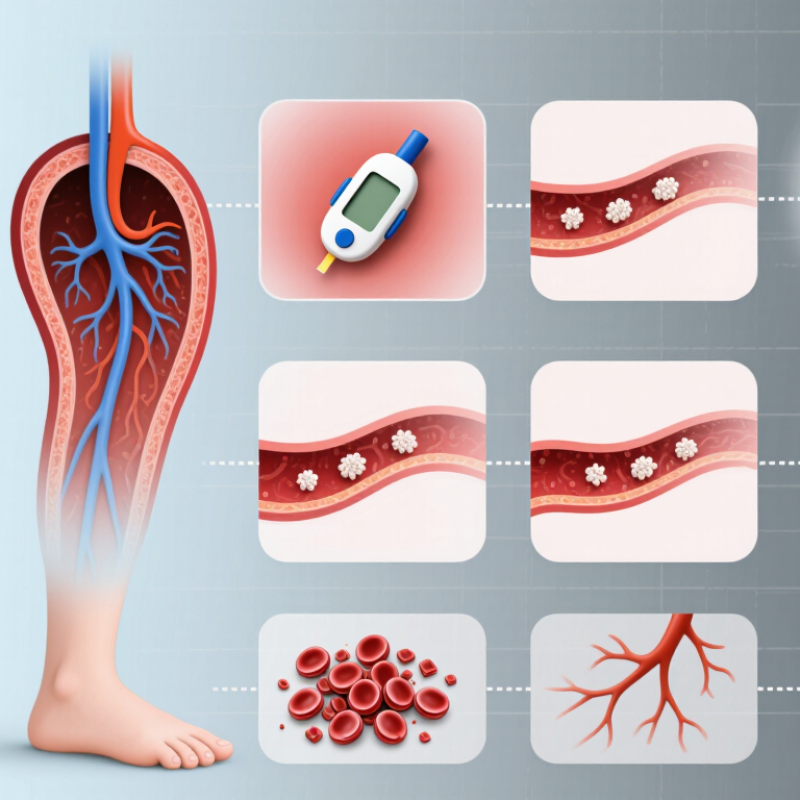
Diabetes can alter vascular anatomy long before an intervention is planned. Persistently high blood glucose can injure the endothelium, the vessel lining that helps regulate blood flow. Arteries may become stiffer, plaque can spread more diffusely, and calcium can make vessel walls harder to expand. Small-vessel disease may also limit blood supply to tissues, particularly in the feet. The pattern varies between people. One scan cannot tell the whole story.
These changes may complicate vascular procedures. Heavy calcification can limit balloon expansion, while diffuse narrowing may leave fewer healthy areas for treatment. Reduced circulation can also slow healing after a procedure. Diabetes may affect kidney function and infection risk, so planning should consider more than the target artery. A care team may review imaging, symptoms, kidney tests, glucose levels, and personal goals. Even then, outcomes are not perfectly predictable; follow-up and reassessment matter.
Tips: Ask how calcification and blood flow beyond the blockage could affect the proposed approach. Tell your care team about recent glucose readings, kidney results, and any foot wounds. Keep follow-up appointments, even when symptoms improve. Small details matter. Better glucose control supports vascular health, but it cannot quickly reverse established artery damage.
Diabetes can make vascular intervention planning less predictable. Years of high glucose may damage the vessel lining and encourage diffuse plaque, while arterial calcification can make lesions harder to cross or expand. Small-vessel disease and reduced sensation may also hide symptoms, so the visible blockage may not tell the whole story. Not every patient follows this pattern. A careful review matters.
Tips: Before a procedure, review kidney function, glucose trends, medications, wound status, and prior imaging. Check pulses and skin temperature, then compare findings with the patient’s symptoms. Plan access and device options around vessel size, calcification, and bleeding risk. Use contrast thoughtfully when kidney function is impaired, and coordinate medication changes with the treating clinician. Keep a backup strategy; anatomy can look different once the catheter is in place.
Technical success means more than opening a narrowing during the procedure. Diabetes can increase the risk of slow healing, infection, restenosis, and repeat procedures, though individual risks vary. A clear endpoint, such as improved blood flow to the foot or relief of limiting symptoms, helps guide decisions. Follow-up should include wound checks, symptom review, and ongoing risk-factor care. One successful angiogram is not the whole story; outcomes take time to assess, and plans sometimes need revision.
After angioplasty or stent placement, the vessel lining must recover while blood flows through the treated area. Diabetes can complicate this repair. High blood glucose may impair endothelial function and sustain inflammation, while small-vessel disease can limit oxygen delivery to tissue. The effect varies; diabetes does not determine an individual outcome.
In practice, healing is shaped by several factors, including glucose patterns, kidney health, smoking, and the length of the treated vessel. A longer lesion or poor circulation may add challenges. Clinicians may review blood tests, symptoms, and follow-up imaging when appropriate. Small details matter. A cool foot, a slow-healing access-site wound, or new chest discomfort should be reported promptly, rather than assumed to be part of recovery.
Care often includes a personalized plan for glucose management and prescribed medicines that protect the treated vessel. Patients should not change antiplatelet or other medication without speaking with their care team. Follow-up matters, even when the incision looks fine. That can be easy to underestimate. Healing is not always visible from the skin, and blood sugar control supports care without guaranteeing that a vessel will remain open.
Diabetes can make vascular procedures more challenging by affecting both blood vessels and healing. Persistently high blood glucose may damage the vessel lining and contribute to inflammation or plaque buildup. Some people also develop heavily calcified arteries, which can make a narrowed segment harder to treat. After an intervention, impaired circulation and slower wound healing may raise the chance of infection or delayed recovery. Small changes matter. The level of risk varies, and diabetes alone does not determine the outcome.
Diabetes may also increase the likelihood that a treated artery narrows again, sometimes leading to another procedure. Risk can be shaped by kidney disease, smoking, blood pressure, and how advanced the vascular disease is. Medication adherence and follow-up imaging may help clinicians identify problems early, but no approach guarantees that a repeat intervention will be avoided. It is worth asking how your individual test results affect the plan.
Tips: Before a procedure, share your recent glucose readings, medication list, and any history of slow-healing wounds. Ask which warning signs need prompt attention, such as increasing redness, drainage, worsening pain, or a cool, pale limb. Keep follow-up visits, and discuss glucose targets and medication changes with your care team rather than adjusting treatment on your own. Healing takes time.
Top 10 Ways Diabetes Impacts Vascular Intervention Success?
How Diabetes Management Can Improve Intervention Outcomes
Diabetes care does not stop at the catheter lab. High glucose can impair immune defenses and wound healing, while diabetes often accompanies kidney disease and diffuse arterial damage. The 2024 ACC/AHA peripheral artery disease guideline reports that diabetes is associated with a two- to fourfold higher risk of developing PAD. That risk makes preparation matter. Before an intervention, clinicians can review glucose trends, kidney function, medications, foot wounds, and signs of infection. A cold, discolored toe or a slow-healing ankle sore deserves attention, not just a procedure date.
Practical targets help. The American Diabetes Association’s Standards of Care in Diabetes—2024 recommends blood glucose of 100–180 mg/dL before, during, and after surgery when this can be achieved safely. Teams can coordinate medication adjustments, monitor glucose around the procedure, and plan follow-up for wound checks and foot care. Small details count: a clear medication list and a scheduled dressing review may prevent avoidable delays. Yet glucose numbers are not the whole story. A patient’s nutrition, circulation, kidney health, and ability to attend follow-up also shape recovery.
Better control may reduce preventable complications, but it cannot guarantee a successful intervention. That deserves honesty. The ideal glucose target can differ, and overly aggressive treatment may cause dangerous lows. Vascular teams should individualize plans with diabetes clinicians and patients, explaining trade-offs in plain language. Even careful planning can miss something; reassessment after discharge matters.
| # | Diabetes-related factor | Potential impact on vascular intervention | Management that may support better outcomes | Outcome relevance |
|---|---|---|---|---|
| 1 | Accelerated atherosclerosis | Diabetes is associated with earlier and more extensive atherosclerotic disease, which can mean longer or more complex lesions to treat. | Individualize cardiovascular risk reduction, including glucose management, lipid-lowering therapy, blood-pressure control, smoking cessation, and appropriate antithrombotic therapy. | May help reduce future cardiovascular and limb events; it does not remove the need for anatomy-specific procedural planning. |
| 2 | Endothelial dysfunction | Chronic hyperglycemia can impair vascular endothelial function, contributing to abnormal vessel responses and disease progression. | Aim for individualized glycemic targets and address blood pressure, cholesterol, physical activity, and tobacco use as part of comprehensive care. | Supports long-term vascular health; no single intervention guarantees improved procedural results. |
| 3 | Arterial calcification | Medial and intimal calcification can make arteries less compliant and may complicate imaging, device delivery, or lesion expansion. | Assess vascular anatomy and calcification before treatment; select procedural tools and imaging based on the individual lesion and patient. | Careful planning may improve technical feasibility and help limit vessel injury. |
| 4 | Peripheral artery disease and below-the-knee disease | People with diabetes are at increased risk of peripheral artery disease, including disease affecting arteries supplying the foot, which can limit tissue blood flow. | Combine appropriate revascularization assessment with foot examinations, pressure off-loading when needed, wound care, and ongoing vascular follow-up. | Adequate perfusion is important for limb healing, but results also depend on wound status, infection, and overall health. |
| 5 | Impaired wound healing | Diabetes, poor perfusion, neuropathy, and elevated glucose can contribute to delayed healing after an incision or for an existing foot ulcer. | Coordinate wound care, optimize perfusion, assess nutrition and glucose control, and use appropriate pressure relief and postoperative surveillance. | May reduce avoidable healing complications and support limb preservation. |
| 6 | Higher infection risk | Diabetes can increase susceptibility to infection, while an infected wound can complicate recovery and threaten a treated limb. | Identify and treat infection promptly, follow appropriate sterile and perioperative practices, and monitor wounds and access sites closely. | Early recognition and treatment can help prevent infection-related delays or complications. |
| 7 | Chronic kidney disease | Diabetic kidney disease may affect procedural risk and requires care when planning contrast-based imaging or endovascular treatment. | Review kidney function and medications, use contrast thoughtfully, and follow an individualized plan for hydration and renal monitoring when appropriate. | Helps balance the need for imaging and treatment with kidney safety. |
| 8 | Platelet and clotting abnormalities | Diabetes is associated with a prothrombotic state and increased cardiovascular risk, which may affect the risk of clotting events around vascular disease and treatment. | Use antiplatelet or other antithrombotic treatment when clinically indicated, considering bleeding risk, the procedure, and the patient’s full medical history. | Appropriate therapy can reduce thrombotic risk; medication choice and duration require clinician oversight. |
| 9 | Restenosis and recurrent disease risk | Diabetes is linked to diffuse vascular disease and can be associated with recurrent narrowing or progression in other arterial segments after treatment. | Support long-term risk-factor management, adherence to prescribed medication, symptom monitoring, and follow-up tailored to the treated vessel and procedure. | Ongoing surveillance can help identify recurrent disease; follow-up schedules should be individualized. |
| 10 | Hypoglycemia and perioperative glucose variation | Changes in eating, medication, or illness around a procedure can cause glucose levels to rise or fall, creating avoidable perioperative safety concerns. | Create a clinician-directed plan for glucose monitoring and diabetes medicines before and after the procedure; avoid both severe hyperglycemia and hypoglycemia. | A clear plan supports safer preparation and recovery without assuming one glucose target fits everyone. |
Note: These are general clinical considerations, not individualized medical advice. The effects of diabetes and the appropriate management plan vary by patient, procedure, kidney function, vascular anatomy, and clinical goals.
High blood glucose can damage the vessel lining. Arteries may stiffen, plaque can spread, and calcium can harden vessel walls. Small-vessel disease may reduce blood flow, especially in the feet.
Yes. Reduced sensation may make symptoms less obvious. A foot wound or cool skin can provide useful clues, but one sign does not explain everything.
Hardened vessel walls may be difficult to cross or expand with a balloon. The artery can look different once a catheter is in place.
Care teams may review imaging, symptoms, kidney function, glucose readings, medications, and wound status. Personal goals matter too. A scan is only a snapshot.
No. Better blood flow during a procedure is one measure, not the whole outcome. Healing, symptoms, and possible narrowing over time also matter.
Share recent glucose readings, kidney test results, medications, and any foot wounds. Mention changes in symptoms, even if they seem minor.
Follow-up may include wound checks, symptom review, and ongoing risk-factor care. Keep appointments, even when symptoms improve. Small details matter.
Better control supports vascular health, but it cannot quickly reverse established damage. Progress varies between people, and plans may need reassessment.
Diabetes can change blood vessels long before an intervention is needed. Persistently high blood sugar may contribute to inflammation, plaque buildup, stiffened arteries, and disease affecting multiple vessel segments. These changes can make it harder to assess the full extent of disease and plan an appropriate procedure. They may also increase technical challenges, such as navigating narrowed or calcified vessels and achieving adequate blood flow.
So, how does diabetes impact the success of vascular interventions? It can influence both the immediate procedure and recovery afterward. Impaired circulation and slower tissue healing may raise the likelihood of wound problems, complications, or recurrent narrowing, sometimes leading to additional treatment. Careful evaluation, individualized procedural planning, and attention to blood sugar and other cardiovascular risk factors can support better outcomes. Ongoing follow-up is also important, since managing diabetes before and after an intervention may help protect vessel health and reduce the chance of future problems.