China Top 10 Why Do Lateral Flow Tests Show False Positives?

Time:2026-09-21 Author:Henry
0%

Lateral flow tests are valued for their speed, affordability, and simple design. Yet many readers still ask, “why do some lateral flow tests show false positives?” The answer is rarely one single problem. Test contamination, cross-reactivity, damaged materials, and incorrect reading times can all create confusing results. A faint line appearing after the recommended window may look alarming, but it may not represent a valid positive result.

Dr. Michael Mina, a physician-scientist known for his work on rapid testing, has said, “A positive test is a positive test.” However, that statement needs careful context. A positive result should be taken seriously, especially when symptoms or recent exposure are present. It should also be checked according to the product instructions and, when appropriate, confirmed through laboratory testing. The surrounding situation matters.

This China Top 10 guide examines the practical reasons behind false-positive lateral flow results. It looks at storage conditions, expired kits, dirty testing areas, and mistakes during sample collection. Even a clean countertop may hold invisible residues. A rushed user may also touch the test strip or add too much liquid. These details are easy to overlook.

The evidence is not always perfect. Different brands use different materials, targets, and instructions. Some results remain difficult to interpret without professional advice. Understanding these limits can reduce panic, prevent careless reassurance, and support better testing decisions.
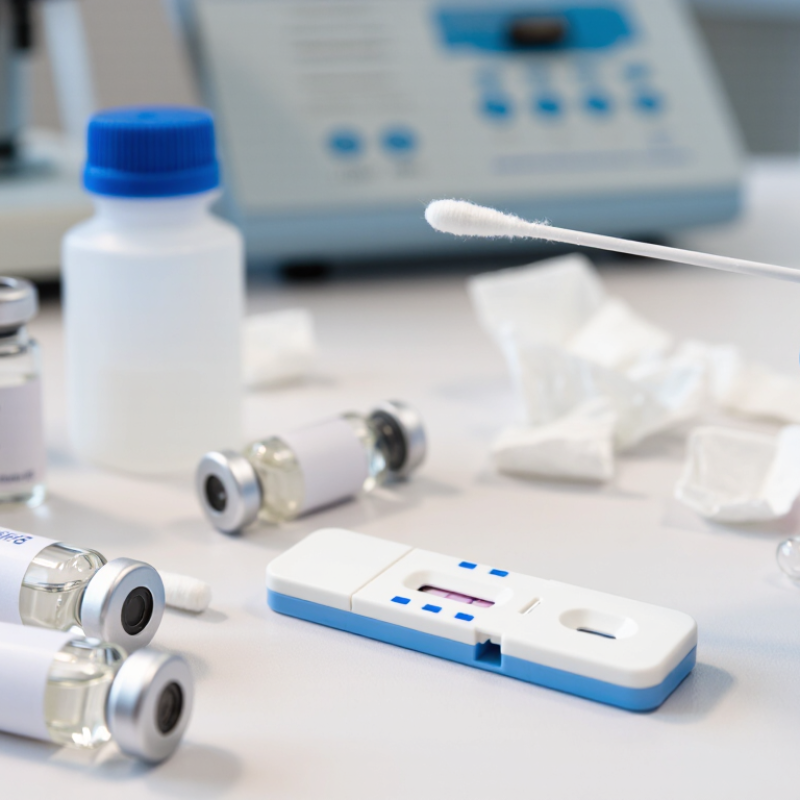
China Top 10 Why Do Lateral Flow Tests Show False Positives?

What a Lateral Flow Test Is and How It Detects a Target

A lateral flow test is a small, paper-based diagnostic device. It usually uses a swab, saliva, urine, or blood sample. The sample moves across the strip through narrow pores.

Inside the strip, labeled particles bind to a specific target. This target may be an antigen, antibody, or another biological marker. The liquid then reaches a test line containing capture molecules. If enough target is present, the particles collect there and create a visible signal. A separate control line should also appear. It shows that the sample moved correctly and the test functioned as intended. No control line means the result is invalid.

The process looks simple, but interpretation needs care. A faint line can be difficult to judge, especially under weak bathroom lighting. Reading the strip too early or too late may also cause confusion. False positives can occur when related substances trigger the test, or when the work surface becomes contaminated. Expired materials, damaged packaging, and poorly collected samples add more uncertainty.

Timing matters greatly. Follow the stated reading window. Do not treat every colored mark as proof of infection or exposure. A rapid test offers useful evidence, not an unquestionable answer. Laboratory confirmation may be appropriate when symptoms, exposure history, and the test result disagree. Even careful testing has limits, and that limitation deserves more attention.

The Ten Main Causes of False-Positive Lateral Flow Results

Why Do Lateral Flow Tests Show False Positives in China?

The ten main causes of false-positive lateral flow results often begin with handling errors. First, contamination from a used swab, bench, or dropper can transfer target material. Expired reagents may also produce unstable lines. Heat and humidity during storage or transport can damage test components. This risk matters in warm regions and busy testing rooms. An incorrect sample-to-buffer ratio may concentrate substances and create an unexpected signal. Too much liquid can also disturb the membrane.

Timing creates another common problem. Reading the cassette after the stated window may reveal a faint evaporation line. Cross-reactivity is possible when antibodies recognize a related biological substance. Interfering substances, including blood, mucus, or certain medicines, may affect some assay designs. The evidence is assay-specific. A recent infection can leave detectable material, which may be mistaken for an active condition rather than a true false positive.

Clerical mistakes matter too. A specimen or label mix-up can connect the right result to the wrong person. Manufacturing defects, although uncommon, can affect membranes, reagents, or control performance. Finally, inexperienced users may mistake shadows, dye streaks, or an incomplete control line for a positive result. A control line confirms flow, not the target result. Careful users should photograph the cassette within the reading window and follow the instructions precisely. Unexpected positives deserve repeat testing with a fresh sample and, when medically important, confirmation by a validated laboratory method. Even careful procedures can fail. That limitation deserves attention.

China Top 10: Why Do Lateral Flow Tests Show False Positives?

The Ten Main Causes of False-Positive Lateral Flow Results

Chart interpretation: Using an illustrative test performance of 90% sensitivity and 99% specificity, the share of positive results that are false positives is much higher when the tested condition is uncommon. This is a mathematical example, not data from any company or brand.

Ten common causes of false-positive lateral flow results: cross-reactivity with similar substances, nonspecific antibody binding, sample contamination, interfering sample components, evaporation lines caused by late reading, expired or damaged test devices, incorrect result interpretation, carryover between samples, specimen mix-ups, and biological factors such as recent infection, vaccination, or antibodies from related conditions.

How Sample Collection and Handling Can Affect Test Accuracy

China Top 10: Why Do Lateral Flow Tests Show False Positives?

Sample collection and handling can quietly change lateral flow test accuracy. Dirty hands, contaminated surfaces, or a swab touching the table may introduce unwanted material. Excess buffer can also flood the test strip and create unclear lines. A rushed swab is not a minor detail.

The Cochrane Review published in 2022 reported pooled specificity of about 99.6% for rapid antigen tests. That still means roughly four false positives per 1,000 tests in tested populations. In low-prevalence settings, this small percentage becomes more important. One handling mistake can therefore create unnecessary concern.

Timing matters. Test components should reach room temperature before use and remain within the manufacturer’s storage range. The World Health Organization recommends protecting testing materials from heat, moisture, and direct sunlight. Users should collect the sample gently, avoid touching the swab tip, and apply the correct number of drops. Reading the strip too early or too late may produce misleading results. A faint mark is not automatically reliable.

There is an uncomfortable weakness here. Instructions are often read while people are stressed or hurried. Even trained workers can misjudge the reading window. Better lighting, a clean work area, and a timer can reduce avoidable errors. Yet collection quality remains difficult to measure, especially outside clinical settings.

How Test Design, Cross-Reactivity, and Interfering Substances Create Errors

China Top 10: Why Do Lateral Flow Tests Show False Positives?

A lateral flow test can turn a faint line into a confident mistake. The strip is not a miniature laboratory. Its antibodies may bind similar proteins, damaged cells, or nearby chemical structures. This cross-reactivity becomes more likely when the target concentration is extremely low. Poorly selected antibodies can therefore create visible signals without the intended analyte.

Test design also matters. Excessive sample volume may flood the membrane and disturb capillary flow. Weak control lines, uneven coating, or unclear reading windows can confuse interpretation. In addition, expired reagents and unsuitable storage temperatures may alter antibody performance. Not always. A 2022 Cochrane Diagnostic Test Accuracy Review reported approximately 99.6% pooled specificity for rapid antigen tests. Yet, at 0.1% disease prevalence, a 0.4% false-positive rate can produce more false alarms than true positives.

Interfering substances add another layer. Mucus, blood, strong detergents, high acidity, and some medicines may affect migration or color development. The FDA recommends interference studies using realistic concentrations, while CLSI EP12 emphasizes testing near the clinical decision point. Those controls are useful, but they cannot represent every Chinese household or clinic condition. Matrix effects matter. Manufacturers should compare clean samples with real-world specimens, repeat borderline results, and report limitations plainly. A perfect validation claim deserves caution.

How to Confirm, Prevent, and Respond to a False-Positive Result

Why Do Lateral Flow Tests Show False Positives?

A false-positive lateral flow result can feel alarming, but several practical causes exist. Reading the strip after the stated time may create a faint evaporation line. Contamination from hands, surfaces, or liquid can also affect the test. Damaged packaging, poor storage, or an expired device may reduce reliability. Some tests can react with related substances or conditions, depending on the test type. A visible line is important, but it is not always final proof.

Confirm the result with a new, unopened test and a fresh sample. Follow the instructions exactly, including the reading window. If the second result remains positive, arrange confirmation through an appropriate laboratory method or speak with a qualified healthcare professional. Do not ignore symptoms. Do not make major medical decisions from one home result alone. I have found that rushed testing causes more uncertainty than careful testing, although instructions are not always perfectly clear.

Tips:

  • Wash and dry your hands before testing.
  • Use a clean, flat surface.
  • Check the expiry date and control line.
  • Set a timer instead of estimating.
  • Store tests within the recommended temperature range.
  • Record the test time and result.
  • If the control line is missing, treat the test as invalid.
  • Follow current local health guidance, especially when symptoms, pregnancy, or ongoing treatment are involved.

FAQS

How can sample collection affect lateral flow test accuracy?

A rushed swab may collect too little material. Touching the swab tip can also introduce contamination. Small details matter.

Can dirty hands or surfaces cause misleading results?

Yes. Dirty hands, a used table, or a contaminated container may add unwanted material. Work on a clean, dry surface.

Why does the amount of buffer matter?

Too many drops can flood the test strip. This may disturb liquid movement and create unclear lines. Follow the stated drop count.

How should test materials be stored before use?

Let the components reach room temperature before testing. Protect them from heat, moisture, and direct sunlight. Storage mistakes can reduce reliability.

Can reading the test at the wrong time cause confusion?

Yes. Reading too early or too late may produce misleading lines. Use a timer and check the result within the stated window.

Does a faint line always mean a reliable positive result?

Not automatically. Faint marks may reflect low target levels, interference, or reading errors. Repeat a borderline result according to the instructions.

How can test design create false-positive signals?

Test antibodies may bind similar proteins or damaged cells. Uneven coating, weak control lines, or poor flow can also confuse interpretation.

Which substances may interfere with the test?

Mucus, blood, strong detergents, high acidity, and some medicines may affect color development or liquid movement. Real samples are messy.

How common are false positives in rapid antigen testing?

One review reported about 99.6% pooled specificity. Roughly four false positives could occur per 1,000 tests. Low prevalence makes them more noticeable.

What practical steps can reduce avoidable testing errors?

Wash and dry your hands, keep the area clean, avoid touching the swab tip, and measure drops carefully. Better lighting helps. So does patience.

Conclusion

Lateral flow tests are rapid diagnostic tools that use a liquid sample moving across a test strip to identify a specific target through binding reactions. Although convenient, they are not infallible, which raises the important question: why do some lateral flow tests show false positives? Ten common causes include contaminated samples, poor collection technique, incorrect storage, expired materials, excessive sample volume, unclear result timing, damaged test components, cross-reactivity with similar substances, interfering chemicals or medications, and manufacturing or handling defects.

Accuracy also depends on how the sample is collected, transported, and prepared. A positive result may be influenced by environmental conditions, residue on equipment, or reactions that the test was not designed to distinguish. To confirm a questionable result, users should follow the instructions carefully, repeat testing with a properly collected sample, and seek an appropriate laboratory-based method when necessary. Preventing errors requires correct storage, clean handling, precise timing, and careful interpretation of the test window.

Henry

Henry

Henry is a dedicated marketing professional with a profound expertise in the company's offerings. With years of experience in the industry, he possesses an impressive understanding of the market dynamics and consumer behaviors that drive success. Henry is committed to sharing his insights through......